Vanuatu comes up in two very different searches: people planning a trip to the South Pacific, and people researching its citizenship programme. Both start with the same question — where exactly is it, and what kind of country is it?
This page answers the factual questions: location, islands, languages, currency, time, safety and climate. If you are here for the citizenship programme, the practical pages are linked at the end.
Where is Vanuatu?
Vanuatu is an archipelago in the South Pacific Ocean, roughly 1,750 km east of Australia and about 500 km north-east of New Caledonia, with Fiji to the east and the Solomon Islands to the north. On a map it sits as a narrow Y-shaped chain running roughly north to south.
It is an independent sovereign state and a full member of the United Nations, independent from the former Anglo-French Condominium of the New Hebrides since 30 July 1980.
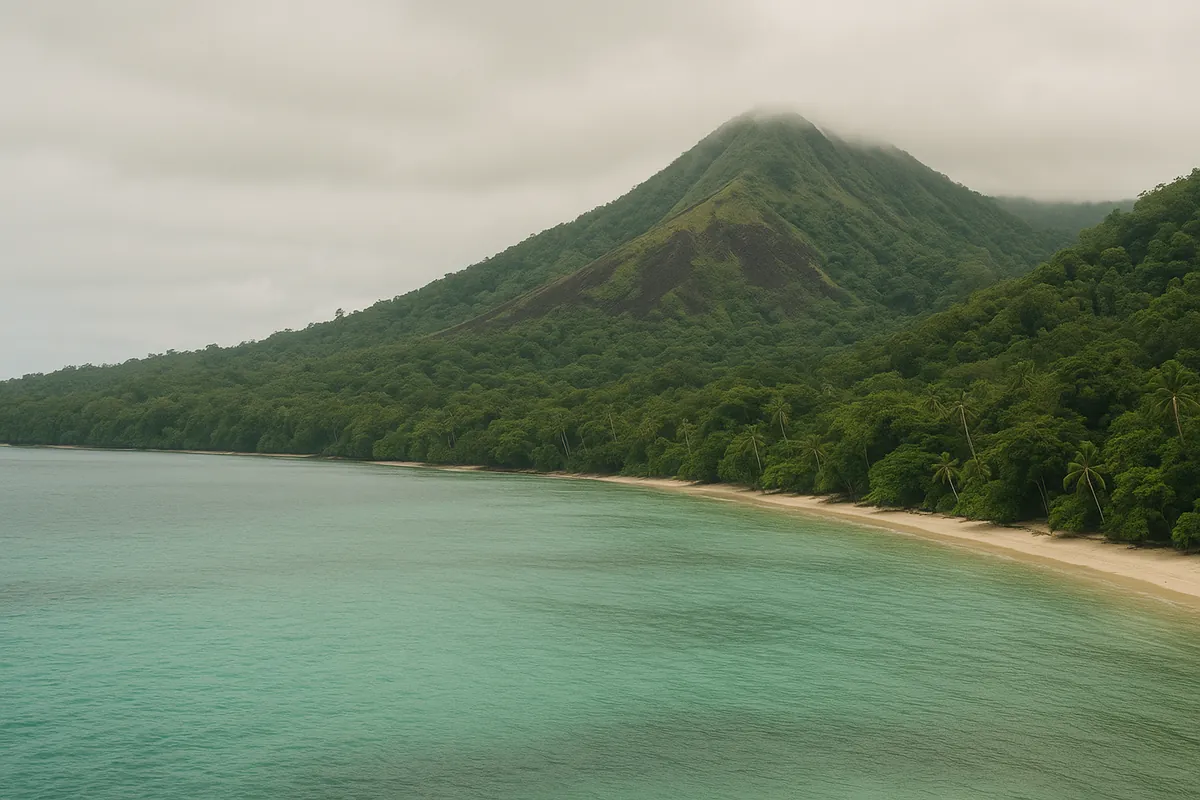
The islands and the capital
The country consists of 83 islands, of which around 65 are inhabited. The capital, Port Vila, is on the island of Efate; the second city, Luganville, is on Espiritu Santo. The total population is in the region of 340,000 — comparable to a mid-sized city, spread across a territory that stretches more than 1,000 km from end to end.
That scale matters practically: government institutions, the Citizenship Commission and the international airport are concentrated in Port Vila.
Languages, currency and time
| Vanuatu | |
|---|---|
| Official languages | Bislama, English and French |
| Everyday language | Bislama, an English-based creole, is the lingua franca |
| Currency | Vatu (VUV), often written VT |
| Time zone | UTC+11, with no daylight saving |
| Capital | Port Vila, on Efate |
| Independence | 30 July 1980 |
Three official languages are a legacy of joint British and French administration. In practice government business and the citizenship process are conducted in English and French, and documents are issued accordingly.
Is Vanuatu safe?
For a visitor, ordinary crime levels are low by international standards, and violent crime against foreigners is uncommon. Normal precautions apply in Port Vila after dark and around nightlife areas, as anywhere.
The more relevant risk is natural rather than criminal. Vanuatu sits on the Pacific Ring of Fire and ranks consistently among the most disaster-exposed countries in the world: tropical cyclones between November and April, earthquakes, and several active volcanoes. This is a genuine planning factor for anyone considering property or residence, and it is not something a citizenship brochure usually mentions.
Climate and when to visit
The climate is tropical, moderated by trade winds. The drier, cooler season runs from May to October and is the usual travel window; the wet season from November to April is hotter, more humid and coincides with cyclone season.
Do you need a visa to visit Vanuatu?
Vanuatu grants visa-free entry to visitors from a wide range of countries, typically for stays of up to 30 days, with extensions available locally. Requirements depend on nationality and change, so the position should be checked with the Vanuatu Department of Immigration and Passport Services before booking.
A separate point that surprises people: obtaining Vanuatu citizenship through the investment programme does not require travelling to Vanuatu at all. The one step that must be done in person is biometric enrolment for the passport, compulsory since 1 July 2025, and it is taken at a designated location — Port Vila, Dubai, Hong Kong or Nouméa — rather than necessarily in Vanuatu.
Why people research Vanuatu
Beyond tourism, the country is known for two things: a zero-tax regime on personal income, and one of the fastest citizenship by investment programmes in the world. Both are real, and both are narrower than the marketing suggests — the tax position depends on where you are resident, not merely on which passport you hold.
The practical detail is in the application process, the cost breakdown, the visa-free list and the tax rules.